
Learn more about our help with Assignments: Linear Algebra
Search
Linear Algebra
Determine the relationship between the adjoint of A and the adjoint of B.
Linear Algebra
Let z = cosθ + isinθ.
Then z^n = cos(nθ) + isin(nθ) for all n ∈ N(by de Moivre) and z^−n = cos(nθ)−isin(nθ).
(a) Show that 2cos(nθ) = z^n + z^−n and 2isin(nθ) = z^n −z^−n
(b) Show that 2^ncos^n θ = (z + 1/z)^n and (2i)^n sin^n θ = (z− 1 z/n)
(c) Use (b) to express sin^7 θ in terms of multiple angles
(d) Express cos^3 θsin^4 θ in terms of multiple angles
(e) Eliminate θ from the equations 4x = cos(3θ) + 3cosθ; 4y = 3sinθ−sin(3θ).
Then z^n = cos(nθ) + isin(nθ) for all n ∈ N(by de Moivre) and z^−n = cos(nθ)−isin(nθ).
(a) Show that 2cos(nθ) = z^n + z^−n and 2isin(nθ) = z^n −z^−n
(b) Show that 2^ncos^n θ = (z + 1/z)^n and (2i)^n sin^n θ = (z− 1 z/n)
(c) Use (b) to express sin^7 θ in terms of multiple angles
(d) Express cos^3 θsin^4 θ in terms of multiple angles
(e) Eliminate θ from the equations 4x = cos(3θ) + 3cosθ; 4y = 3sinθ−sin(3θ).
Linear Algebra
Let w be a negative real number, z a 6th root of w.
(a) Show that z (k) = ρ^1/6 [cos((π+2kπ)/6) + isin((π+2kπ)/6)], k = 0, 1, 2, 3, 4, 5 is a formula for the 6th roots of w. Show all your working.
(b) Hence determine the 6th roots of−729.
(c) Given z = cosθ + isinθ and u + iv = (1 + z)(1 + z^2). Prove that v = utan(3θ/2) and u2 + v2 = 16cos^2(θ/2)cos^2(θ)
(a) Show that z (k) = ρ^1/6 [cos((π+2kπ)/6) + isin((π+2kπ)/6)], k = 0, 1, 2, 3, 4, 5 is a formula for the 6th roots of w. Show all your working.
(b) Hence determine the 6th roots of−729.
(c) Given z = cosθ + isinθ and u + iv = (1 + z)(1 + z^2). Prove that v = utan(3θ/2) and u2 + v2 = 16cos^2(θ/2)cos^2(θ)
Linear Algebra
Let A={b1,b2,b3} be a set of three-dimensional vectors in R3.
a. Prove that if the set A is linearly independent, then A is a basis of the vector space R3.
b. Prove that if the set A spans R3, then A is a basis of R3.
a. Prove that if the set A is linearly independent, then A is a basis of the vector space R3.
b. Prove that if the set A spans R3, then A is a basis of R3.
Linear Algebra
QUESTION 5
Let a11 x1 + a12 x2 + a13x3 = b1
a21 x1 + a22 x2 + a23 x3 = b2
a31 x1 + a32 x2 + a33 x3 = b3.
Show that if det (A) ≠ 0 where det(A) is the determinant of the coefficient matrix;
then x2 = det(A2)/det(A) where det(A2) is the determinant obtained by replacing the second column of det(A)
by (b1; b2; b3)^T
Let a11 x1 + a12 x2 + a13x3 = b1
a21 x1 + a22 x2 + a23 x3 = b2
a31 x1 + a32 x2 + a33 x3 = b3.
Show that if det (A) ≠ 0 where det(A) is the determinant of the coefficient matrix;
then x2 = det(A2)/det(A) where det(A2) is the determinant obtained by replacing the second column of det(A)
by (b1; b2; b3)^T
Linear Algebra
QUESTION 5
Let a11 x1 + a12 x2 + a13x3 = b1
a21 x1 + a22 x2 + a23 x3 = b2
a31 x1 + a32 x2 + a33 x3 = b3.
Show that if det (A) ≠ 0 where det(A) is the determinant of the coefficient matrix;
then x2 = det(A2)/det(A) where det(A2) is the determinant obtained by replacing the second column of det(A)
by (b1; b2; b3)^T
Let a11 x1 + a12 x2 + a13x3 = b1
a21 x1 + a22 x2 + a23 x3 = b2
a31 x1 + a32 x2 + a33 x3 = b3.
Show that if det (A) ≠ 0 where det(A) is the determinant of the coefficient matrix;
then x2 = det(A2)/det(A) where det(A2) is the determinant obtained by replacing the second column of det(A)
by (b1; b2; b3)^T
Linear Algebra
2. Let A={b1,b2,b3} be a set of three-dimensional vectors in R3.
a. Prove that if the set A is linearly independent, then A is a basis of the vector space R3.
a. Prove that if the set A is linearly independent, then A is a basis of the vector space R3.
Linear Algebra
[|111||230||383|] ,is the matrix invertible?
Linear Algebra
can the system
3xy-4y-z=5
3x+2y-z=0
x-y+z=1
be solved by using Cramer's rule? if not, why? if yes, solve it.
3xy-4y-z=5
3x+2y-z=0
x-y+z=1
be solved by using Cramer's rule? if not, why? if yes, solve it.
Linear Algebra
Given: A= 004322111− B= 004322111− Find: a) –A^{-1}+ 3B^T b) B^{-1}+ ( A^T+A^{-1})

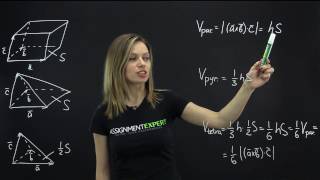
Finding a professional expert in "partial differential equations" in the advanced level is difficult.
You can find this expert in "Assignmentexpert.com" with confidence.
Exceptional experts! I appreciate your help. God bless you!
 #340153 on Dec 2023
#340153 on Dec 2023