
Learn more about our help with Assignments: CalculusPre-CalculusDifferential CalculusMultivariable Calculus
Search & Filtering
Calculus
y=3z+4x2
Calculus
Find x. e^π = e^(2x) sinx
Calculus
the acceleration due to gravity on the planet Calcllceara is -10m/s^2. A stone is thrown downwards with a speed of 5 m/s from the upper observation deck of the Base Camp Alpha Tower, 150 m above the ground
Calculus
Find the asymptotes parellel to the x and y axis of the curves ( x^3+y^3)y=bx^3
Calculus
Find the volume of the solid inside the sphere x^2+y^2+z^2=9 and inside the x^2+y^2=1clinder
Calculus
Using the ε-N definition of convergence of sequences, prove that limit of (2/n) when n goes to infinity is 0.
Calculus
Determine the limit of (1+2+...+n)/(n^2) when n goes to infinity.
Can I solve this by taking the sequence to n brackets?
Can I solve this by taking the sequence to n brackets?
Calculus
We know that limit of (3n/(n+4)) when n goes to infinity is 3. If the definition of convergence of sequences, ε=10^(-5) then determine the cutoff index N.
Calculus
Determine, with proof, the supremum and infimum of the set A={(n+1)/n | n ∈ N}
Calculus
Determine the monotonicity of the sequence if (an) satisfies the equality (an+1)-(an)=-3 for all n.

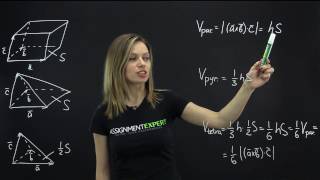
Finding a professional expert in "partial differential equations" in the advanced level is difficult.
You can find this expert in "Assignmentexpert.com" with confidence.
Exceptional experts! I appreciate your help. God bless you!
 #340153 on Dec 2023
#340153 on Dec 2023