Answer:
1) Esters are normally reduced by reaction with lithium aluminum hydride to alcohols. For example
CH3−C−O−CH2−CH2−CH3propyl ethanoate1.LiAlH4ether2.H3O+CH3−CH2−OHethanol+CH3−CH2−CH2−OHpropanol
2) Also was founded abstract where a novel one-pot procedure for a directly reductive conversion of esters to the corresponding ethers by Et3SiH in the presence of a catalytic amount of InBr3 is described. This simple catalytic system appeared to be remarkably tolerant to several functional groups.
5mol⋅%InBr34eq. Et3SiHCHCl3, 60∘C, 1−6 hR+O−R−R:alkyl,benzylR′:alkyl,benzyl
3) Esters can be reduced to aldehydes with diisobutylaluminum hydride (DIBAL), a bulky source of hydride ion
Example 1: Reduction of esters to aldehydes
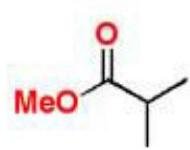
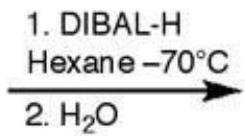
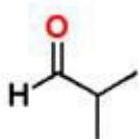
Low temperature is important to prevent further reduction
4) In the Fukuyama reduction, a carboxylic acid is first converted to a thioester through addition of a thiol (with a mechanism similar to esterification). The thioester is then reduced to an aldehyde by a silyl hydride with a palladium catalyst.
O∣R+OHHS−R∣R+S+R−O∣R−S+R−SiHEt3∣Pd/CO∣R−O−
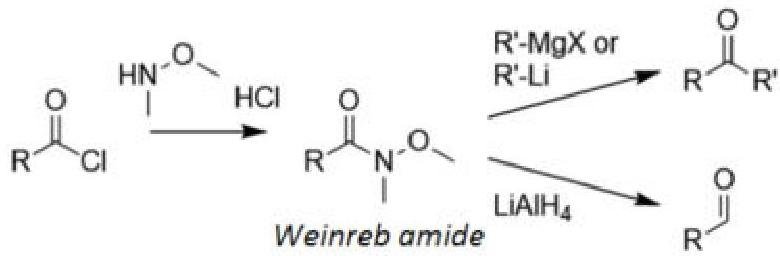
5) In the Weinreb reaction, an acyl chloride is first converted to the Weinreb amide, then treated with an organometallic reagent to form a ketone, or lithium aluminum hydride to form an aldehyde
Answer provided by AssignmentExpert.com



